It’s About Aircrew

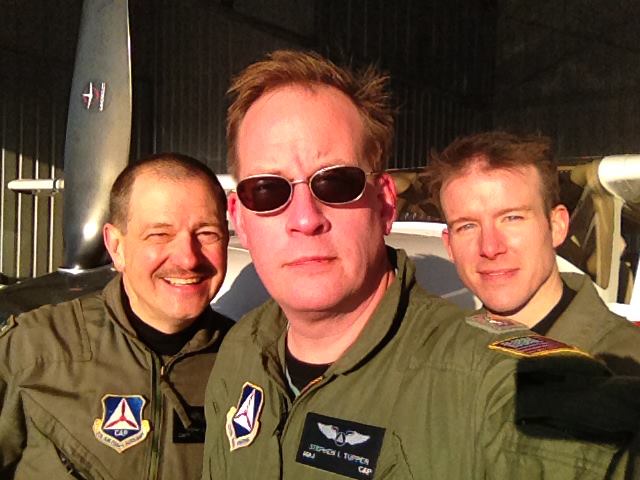
The low clouds and snow flurries retreated today and, as luck would have it, Capt Norm Malek and I had scheduled the G1000-equipped CAP C-182 all afternoon.  So we launched around 1:00 and wrung out the aircraft for a total of 3.3 Hobbs hours.

As of this morning, all of my approaches for instrument currency dated from October, which means that they’re going to expire next month.  So I clearly needed some approaches.  Capt Malek didn’t need as many, having recently flown some single-pilot actual as part of some aircraft repositioning work this week.

So I rocked out a hold on a DME fix about 18 miles sooutheast of Flint, then went in for the ILS 27, the RNAV 18, the ILS 27 again, and the VOR 18 before landing and switching pilots.  2.0 ASEL high-performance and 1.6 of it under the hood.  We had some VFR traffic around NUPUE, my intended IAF, and I volunteered to be vectored to JUBER instead, so there was some fast fingerwork on the G1000.  But no worries. [Read more...]

Blues, Blue Ridge, and the Commercial Checkride Looms

This is a regular blog post. If you’re looking for show notes for audio and video episodes, you’ve come to the right place! Just scroll around and you’ll find ‘em!
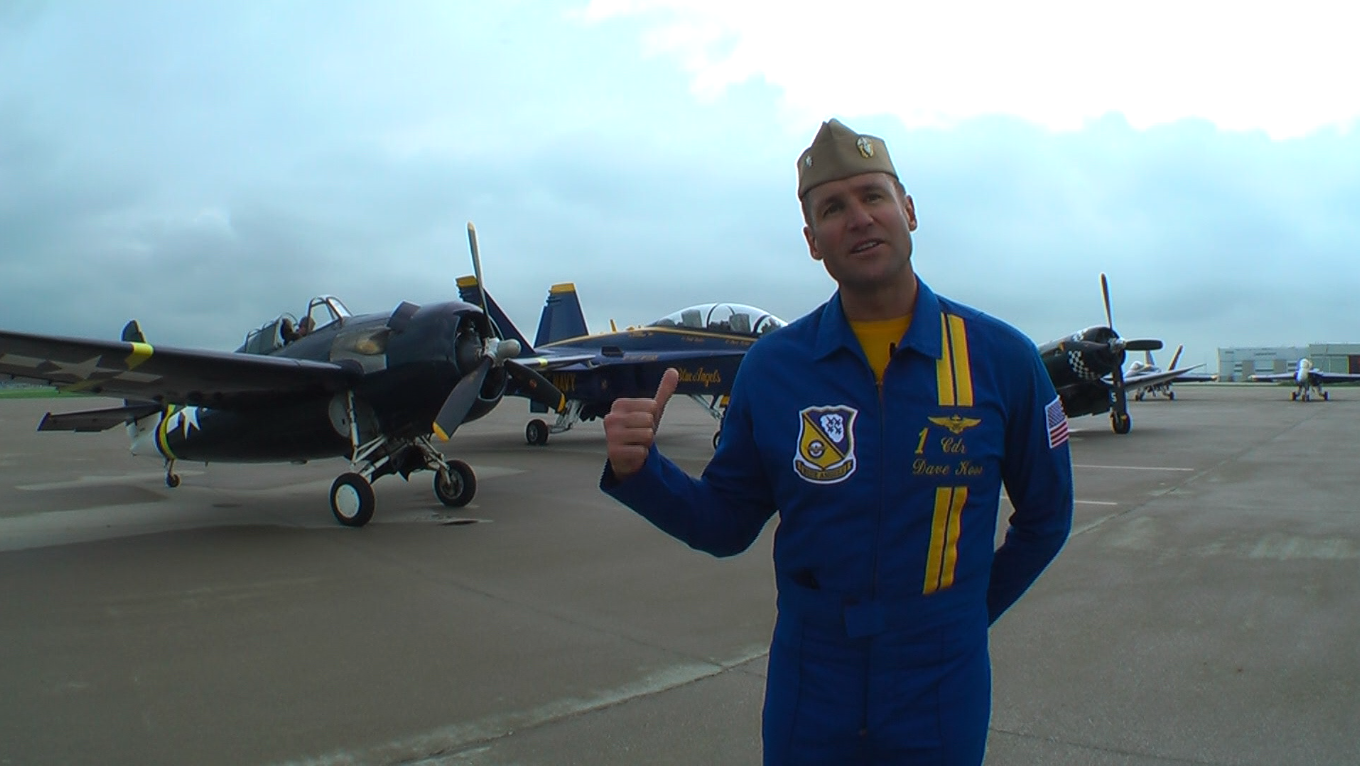
I’m almost decompressed from the weekend. Saturday at Indy, I was invited to head over to Indianapolis International for an interview with CDR Dave Koss, Boss of the Blue Angels. They had lined up an F-4U Corsair, an FM-2 Wildcat, and an F/A-18D Hornet (Blue Angel jet No. 7) on the ramp as a backdrop highlighting the Centennial of Naval Aviation (“CONA” for short).
I did my best to ask some nonstandard questions, but Boss is both well-prepared and enthusiastic. I asked him how all of the aircraft behind him were . . . wait for it . . . the same. He didn’t skip a beat. “The Naval Aviators who fly them.” And he’s dead right.
It was a short interview because it was raining and the Wildcat and Corsair had to beat feet back to indianapolis Regional (KMQJ), where they were on static display. But it turned into a really good three or four minutes that I’ll likely edit into an episode for the show. I might also try to grab a piece of it to use in Acro Camp.

The remainder of the weekend was also pretty epic. I got home around 0400 local on Sunday morning. After a reasonably full day of domestic bliss, I met up with Don Weaver at Pontiac (KPTK) and proceeded to knock out my long commercial cross-country by repositioning a Cirrus SR22 (N711CG) from Pontiac Raleigh-Durham (KRDU) via Mansfield, Ohio (KMFD) and Upshur County, West Virginia (W22).
We were inside the eggshell from about 1,200 AGL off of KPTK all the way to KMFD. We shot the ILS to 300 feet in actual with a stiff crosswind from the right. Later, we broke out of the clag and had some fun poking through fat, ragged cumulus piles most of the way to W22. We cancelled IFR and landed at W22 for gas.
It looked as though we’d be able to stay above the mountain ridges and below the clouds the rest of the way to KRDU, so we departed W22 VFR and had an amazing time navigating through the valleys and over the ridges using a sectional. The peaks were around 4,000 MSL and the clouds varied from 4,500 to 6,000. Plenty of room to stay legal both above and below. But it’s the kind of flying that makes you really work on your SA and keep all of the back doors available in case you round a corner and find out that the next cloud and the next peak are in contact.
We landed at KRDU and buttoned up the airplane. Then we did an almost equally epic 13-hour dash back to KPTK in a rental car. We traded driving duties and whoever was the PND took on DJ duties, digging into the deepest depths of his iPod to introduce the PD to the best of the best in music and motor skills. Don went out and immediately bought Chris Thile’s Not All Who Wander Are Lost after we returned, so I was reasonably successful in my PND shifts.
Now it’s back to the grind. Lots of interesting clients with interesting work. But I also have only a 100nm night cross-country to go in the aeronautical experience department to go, then it’s polish the maneuvers, get the written out of the way, and I’ll be ready to take the commercial checkride.
Back to the trenches! Ttere’s a movie to edit and Battle Creek is only a few weeks away!

Indy 2011: Day 2


This is a regular blog post. If you’re looking for show notes to audio or video episodes, they’re all here. Just keep scrolling!

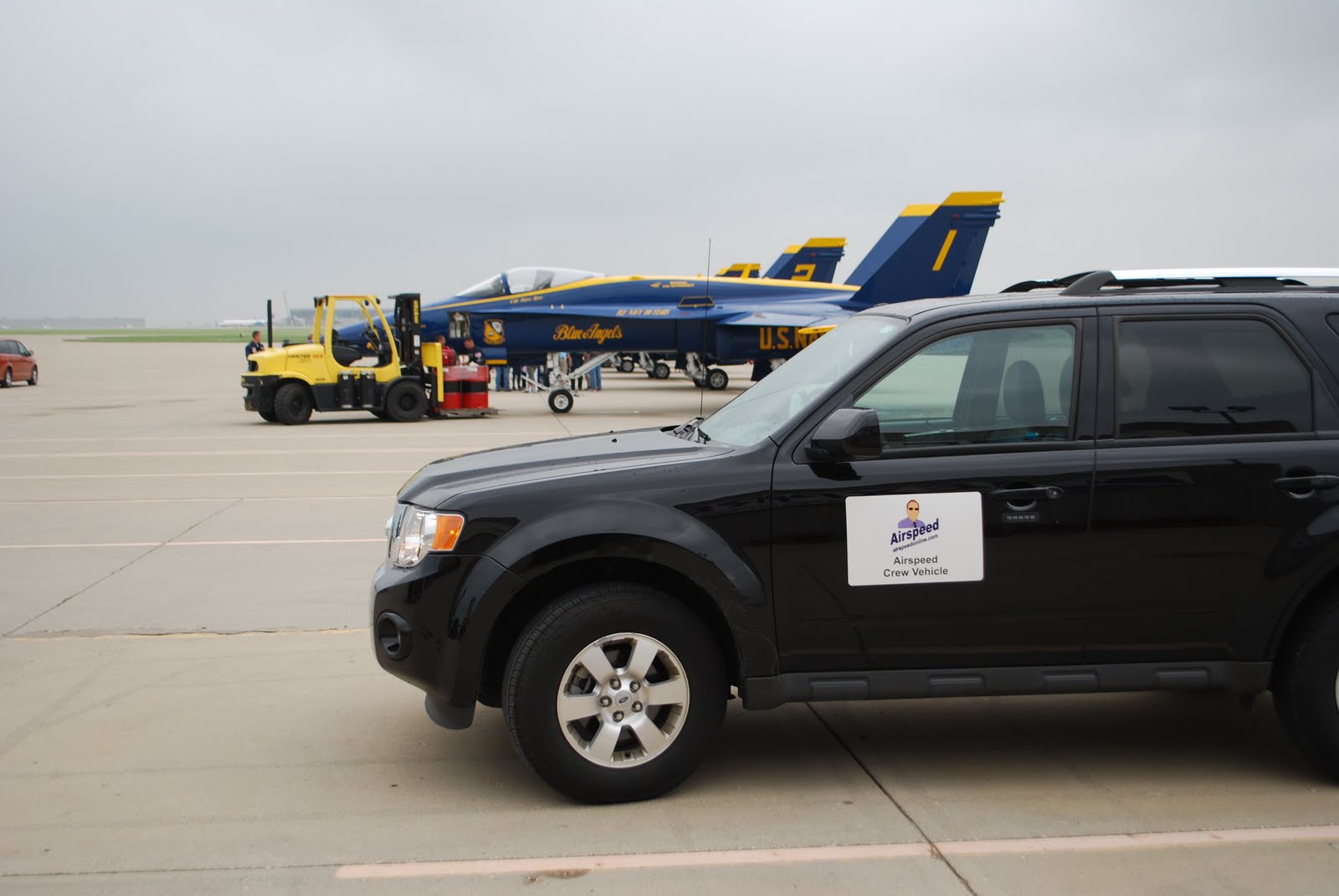
The Airspeed crew vehicle likes to think of itself as Blue Angel Zero. There she is, parked next to CDR David Koss’s No. 1 ship. Waiting for the crew to top up her smoke oil for tomorrow’s demo.

Day 2 (Saturday) at Indy is complete. Worries about the weather were worth having, but – at the end of the day – not worth getting bunched up over. Ceilings started out high and gradually came down. The Blues flew a low or flat show, which was fine with me because I was on my way out to Indianapolis International to catch a photo op with CDR Koss and the pilots of two WWII-era predecessors of the F/A-18C. I opened up the sun roof so I could hear the jet noise better.

The shoot went well and I got a three-minute piece that I might release as an ultra-short video episode.


I love Dave Dacy’s big, honking 500-hp Super Stearman. It’s clean, it’s white, and it’s round. It makes the right noices. You can attach a human speed brake to the top wing. What more do you really need?


I hooked up with the Heavy Metal Jet Team in the late morning and got interviews with Snort and Slick for Acro Camp. The interviews look very crisp in HD. And they should. As long as the light doesn’t completely stink. you have an airplae that the team has gone to the trouble to paint with large areas of the three most useful background colors. Don’t like how the frame looks? Not popping? Take two steps to the left and you have a completely different contrast proposition. Three to choose from. No waiting.

Both Slick and Snort are very, very well-spoken. Great answers to the questions and a sincerity that you can’t fake. Having interviewed about a dozen airshow performers for the movie, I have begun hearing substantially the same answer from multiple performers to the same question. It’s to be expected. There’s probably a limited universe of answers to the same core four or five questions. But both Snort and Slick had new, different, and dead-nuts-on things to say. I had to remember that I was asking questions and not just sitting in my living room watching the movie.

I’m writing this at a Steak n Shake a couple of miles from Indianapolis International. I just offloaded the day’s still pictures from the camera and sent a couple off to the media folks at the airshow. Now it’s back on the road for Michigan. There’s an SR22 at Pontiac that needs to get to the Carolinas and Don Weaver and I are just the guys to take it there!

Indy 2011: Friday – Part 2 – A Ride on Fat Albert Airlines


This is a regular blog post. If you’re looking for show notes to a video or audio episode, you’ve come to the right place. Just keep scrolling. It’s all here!
The Blue Angels are back again at the Indy Airshow. And that means that the ubiquitous blue and gold C-130, Fat Albert, is on the field supporting the Blues and thrilling spectators. And fanboys like me.
Fat Albert is operated by an all-Marine aircrew. I had the opportunity once again to ride on Fat Albert. The first time (2009) was great. But I learned a few things that allowed me to prepare much better for this ride.
For one thing, I showed up with five cameras. Four were small clampable models (two GoPro HD HEROes and two ContourHDs) and the fifth was the trusty Panasonic for handheld use. I checked in with GySgt Ben Chapman when we arrived at the aircraft staging area and he was kind enough to point out some good mount points. Two in the cockpit and two in the back.
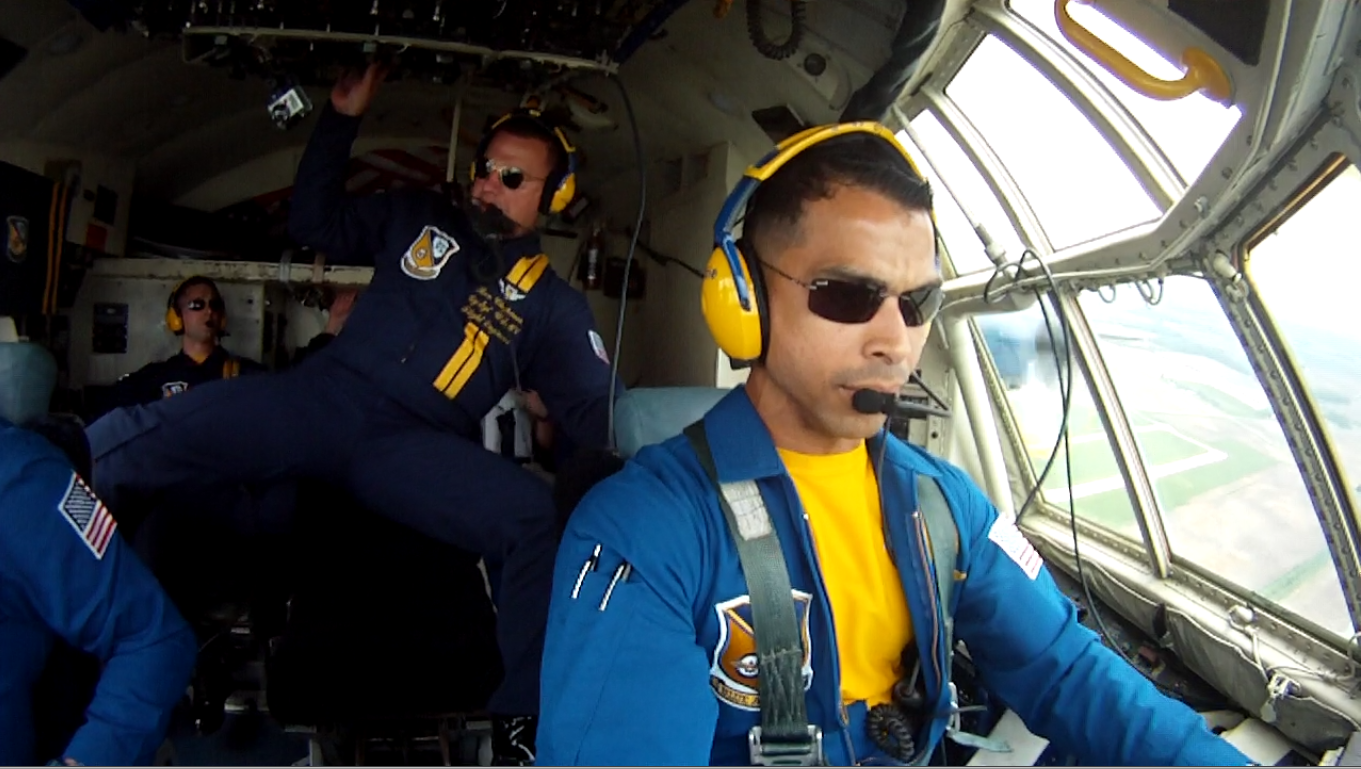
The best footage is from the cockpit camera, a frame grab from which appears at the beginning of this post. There’s a fair amount of vibration, but what mount in a C-130 doesn’t vibrate when you’re yanking and banking as much as this one did during the demo? Have you ever wondered what it looks like in the cockpit during the demo? Yep, that’s GySgt Chapman floating at the top of the climb-out as Capt Edward Jorge pushes the yoke full forward after a 45-degree initial ascent.


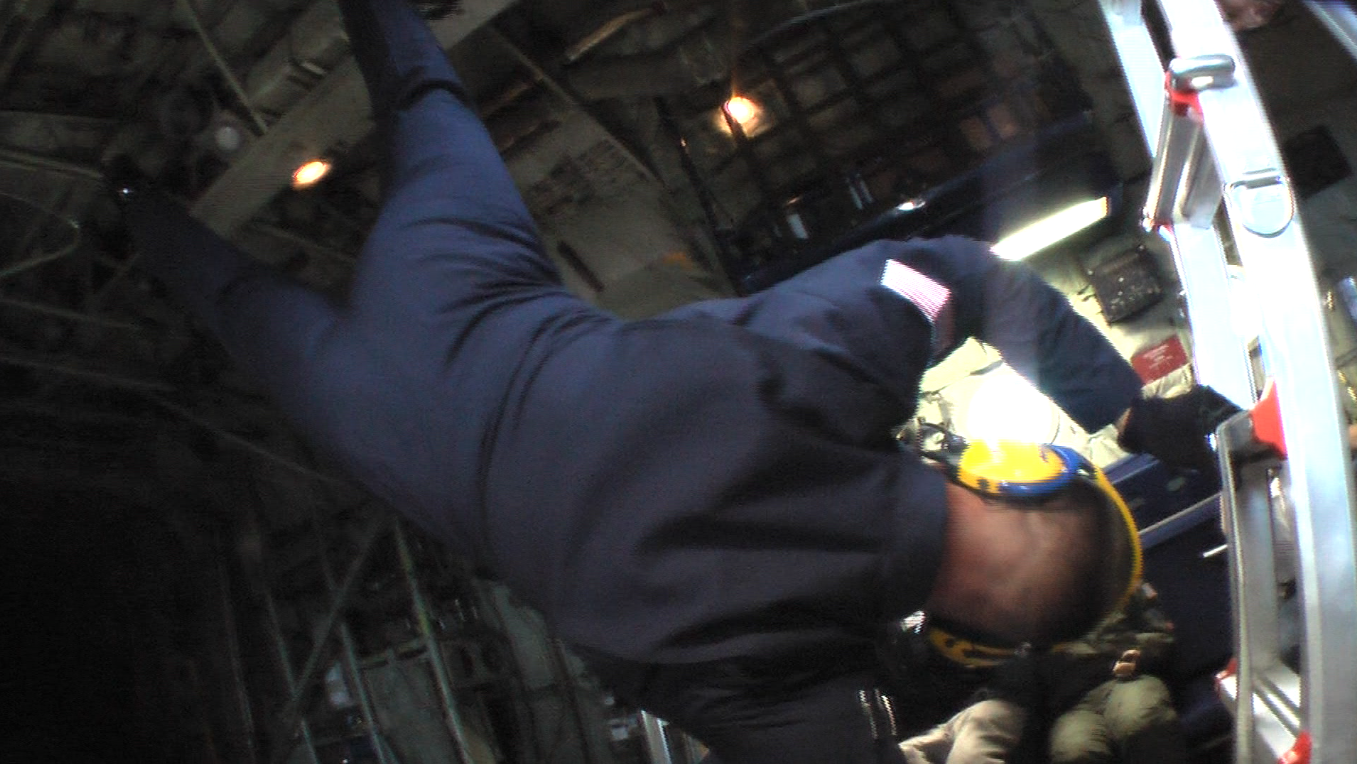
I sat further aft than last time and I’m glad I did. The guys in the back do this all the time and are pretty good at knowing the flight profile and when they’re going to be at zero-G. And taking advantage of it. The shot above is not photoshopped. It’s the real deal. I got it from my seat with the hand-held. He has a good grip on the ladder and the ladder is firmly secured to the cargo deck. But it’s still pretty dramatic-looking.

The main camera for the rear compartment was up on the front bulkhead looking back. It’s rock-solid and doesn’t vibrate. I’ll pull some frame grabs from that one and post them soon.

And, because all of the cameras ran the entire time, I’m going to synch them up so that the video episode is able to cut among the camera angles to giver you a pretty good idea of what it’s like to be among the pax on Fat Albert Airlines.
Thanks much to the crew of Fat Albert and to the Blue Angels! Watch for the video episode coming soon!

Vectren Dayton Airshow 2010 – Saturday


This is a regular blog post. Be sure to check out the other posts, many of which contain show notes and links to show audio and video.

I spent yesterday at the first show day of the Vectren Dayton Airshow. Probably the largest show I’ll hit this year other than Oshkosh. Really well laid out and very nice facilities for media. I’m grateful to the organizers for the access that made this a great first experience at Dayton.

As usual, I get pulled in many different directions at these things. In the best way. To a large extent, what I see from the crowd line has more to do with what other opportunities I’m covering on the field. It might take five or six shows before I get to see all of the performers that performed at any given show site. But that’s okay.

This was my first time seeing Kyle and Amanda Franklin’s wing walking act. I’ve said before that I’m not so into wing-walking. I appreciate the difficulty and skill, but – as always – my thing is chasing things that I’d like to do. I’d love to go fly that beautiful Waco JMF-7 Mystery Ship. But firmly strapped into the cockpit and cranking it around a bit.

They say that people watch NASCAR or airshows or whatever for one of two reasons: To witness the skill and performance or to see a crash or other tragedy. I’m very much about the former interest. I harbor the view that wing walking caters to the latter interest. Am I a bad airshow fan for thinking that? Am I a wuss for being conflicted about it? Would Kyle or Amanda take umbrage? (They are, by all accounts, wonderful folks and I’d sure hate to give the least offense.)

And there’s beauty in that solitary figure on top of the wing challenging the wind blast. I know it’s a team (somebody has to fly the airplane), but the image that gets me is the strange combination of vulnerability and strength in that image. I rarely blow up images that I take at airshows and hang them up in my office. But one of the images for which I’ve done that is a shot of Theresa Stokes atop Gene Soucy’s Show Cat from Selfridge three years ago. It’s really dramatic in a way that doesn’t happen with other acts. Maybe it’s that you can see the performer from head to toe. The performer is not the airplane, as is the case with the other aerobatic acts. Maybe that’s why I like Greg Koontz’s act so much. In the Clem Cleaver act, you get to see Greg out there with the airplane and he flies low with the door off, so you actually get a sense of the man as well as the machine.

Anyway, above is the best of the images of Kyle and Amanda that I was able to capture. I’m not the guy with the long lens (I shoot with a Costco special from Nikon that came with a reasonably capable 200mm zoom), so there’s a fair amount of cropping involved, but I’m pleased with this one. And it evokes that vulnerable, yet defiant thing.


Capt Ryan Corrigan of the Viper East Demo Team put the F-16 through its paces. Really nice display. And the humidity was just about right so that it wasn’t too hazy to shoot, yet the aircraft created excellent vapor on the wings when pulling Gs (which was most of the time).


The show hosted two B-17s. This is the Commemorative Air Force’s B-17F, Sentimental Journey. She has been everything from a bomber in the Pacific theatre to a photo reconnaissance platform to a fire fighting platform. The CAF Arizona Wing acquired the aircraft in 1979 and has been operating it since then.


What’s better than a C-130? An aerobatic C-130 flown by steely-eyed and slightly crazy Marines. The days of JATO launches are over, but I can’t seem to get bothered by that. It’s just stinking majestic to see this bird fly and be as nimble as it is, notwithstanding its 76,000-lb (empty) weight. Plus, a Fat Albert pass is an opportunity for us guys with the shorter lenses to actually get a better shot than the long-lensed shooters. Although I was kind of jealous of one guy who actually got the face of the rider up in the dome on top of the aircraft.


This is also the first time in years that I was close enough to the Blues to be able to see them step. In a very real sense, the demo begins a good 15 minutes prior to takeoff. They do the precision step even though 99% of the crowd can’t see it, and even when they stage across the field and almost no one can see it.

I often talk about stomping the ramp or doing the Haka prior to a flight. The Haka part is mainly in jest. (But only mainly.) But a preflight routine of almost any kind focuses you and serves as the thing that separates two-dimensional activities from the impending three-dimensional activities. And that’s a good thing. You’re about to go do something completely divergent from what our species is used to. You’re about to go and fly on behalf of those homo sapiens who lived during the 200,000 years prior to aviation. It’s serious business and it sends a chill up my spine every time. Maybe the Haka isn’t such a bad idea. Say on the ramp at KBAK for NESA MAS next year?


I also interviewed Maj Luke “Supa” Fricke, a T-38 IP from the 560th Flying Training Sqn, 12th Flying Training Wing at Randolph AFB near San Antonio, Texas. He’s an IP in the T-38C who makes other IPs for a living. He started out in the T-37 Tweet and then moved to the T-38 for advanced training. He then did a stint as a T-38 first-assignment instructor pilot (“FAIP”) before going on to fly the A-10 Thunderbolt II (the iconic “Warthog”) for 13 years before heading to Randolph to train instructors in the T-38C.

I’m going to use the footage to supplement the T-38 ride footage from the Beale AFB flight last week. We weren’t able to do a planeside interview at Beale because of the amount of noise on the ramp (not a bad thing, mind you – I adore that kind of noise). So the planeside footage of Maj Fricke will go nicely with the episode. I also got some beauty shots of the airframe to drop into the episode at strategic moments.

Maj Fricke did a great job in the interview. He was nearly perfect at working each question into his answer so none of my voice had to be in the interview. He also did a great job of stopping and restarting at logical points when the AeroShell T-6s drowned him out momentarily. (Note the T-6 smoke arc behind him in this frame grab, which was unplanned but kind of cool.) I’m guessing that he’s done this before. I hope his PAO knows what a great ambassador he or she has in Supa.

So now it’s back to the grindstone for a week and a half until Oshkosh. I’m planning to leave southeast Michigan at oh-dark-thirty the morning of Wednesday 28 July and hit the American Champion factory on the way to OSH. FOD and I should make it there late afternoon and then be on the grounds through Saturday mid-day. I’ll tweet the lat-long for Firebase Airspeed as soon as we get settled in. See you there!